Problem Statement
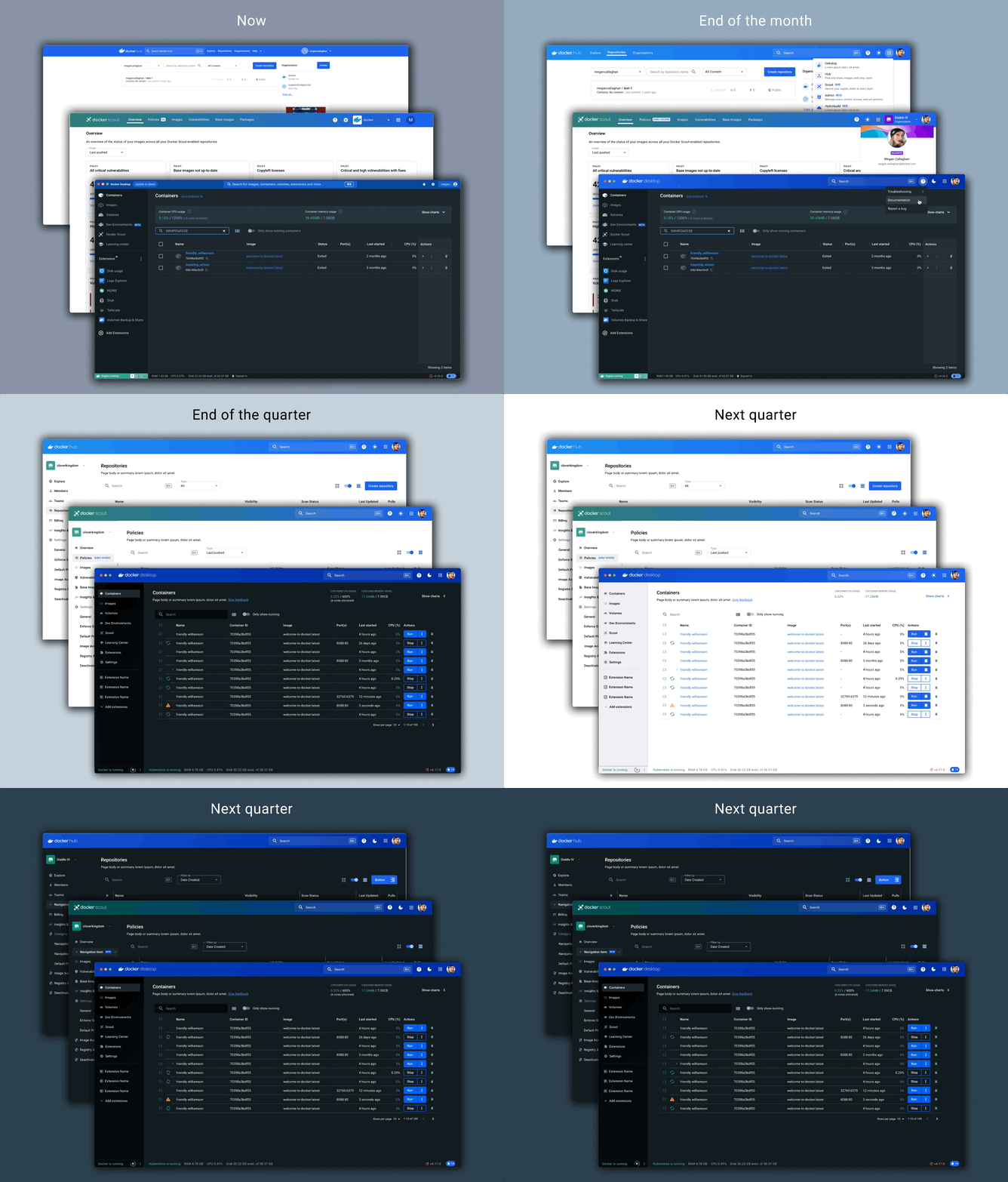
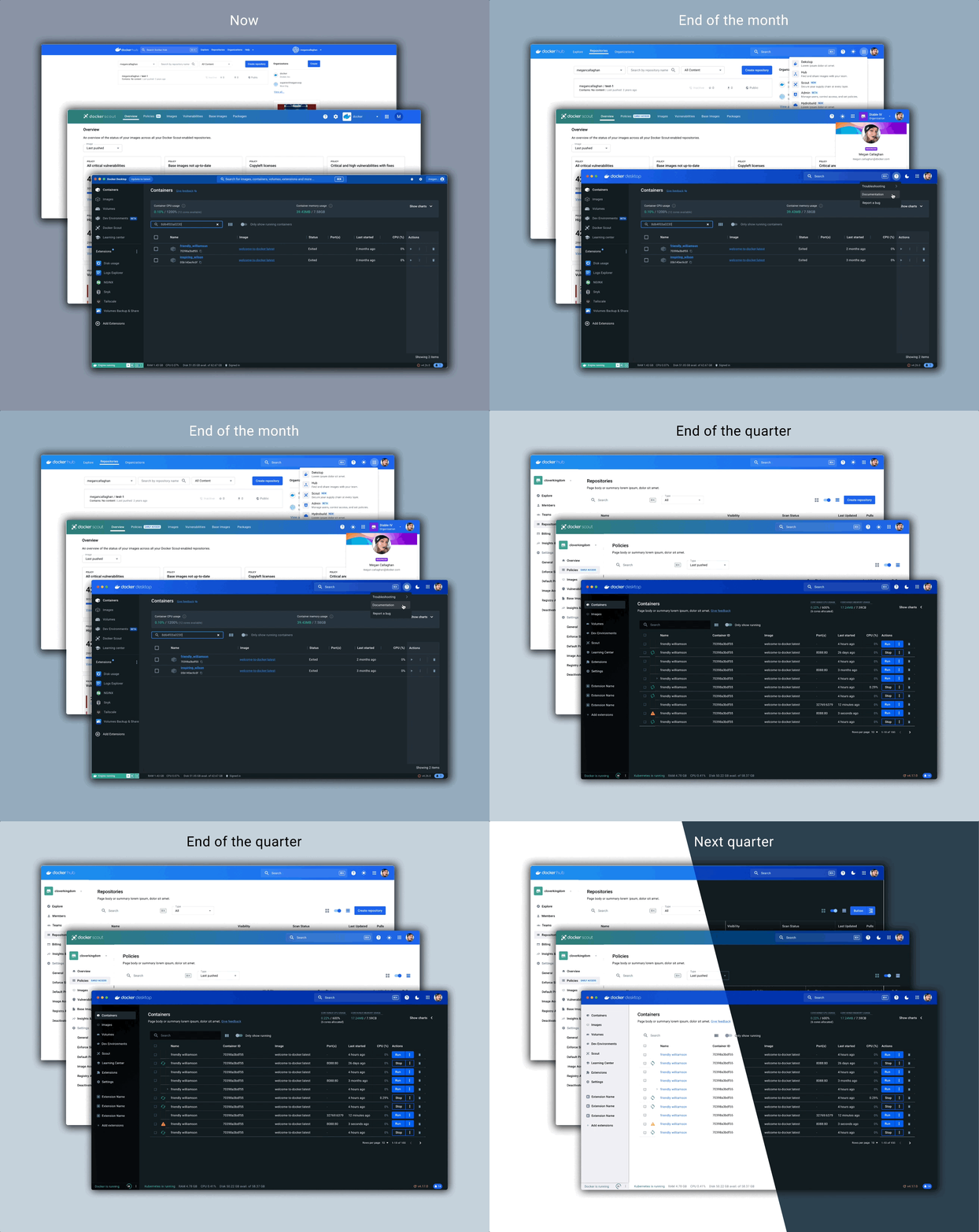
Fragmented design language
Docker's rapid growth led to inconsistencies across their product suite serving 20M+ developers worldwide. Different teams were creating components in isolation, leading to inconsistent brand expression, duplicate work, unpredictable user experiences, and slower development cycles.
A comprehensive design system was needed to unify the experience and increase efficiency.
Challenges
Scale and adoption
With millions of developers relying on Docker daily, any design system changes needed to be implemented carefully. The challenge was creating a system flexible enough for different product needs while maintaining consistency - all while simultaneously building trust across product and engineering.
Getting buy-in from multiple product teams and ensuring smooth adoption across the organization required careful planning and communication. Adoption risk was high due to legacy patterns, distributed teams, and varying levels of design system maturity across product lines.
Solutions
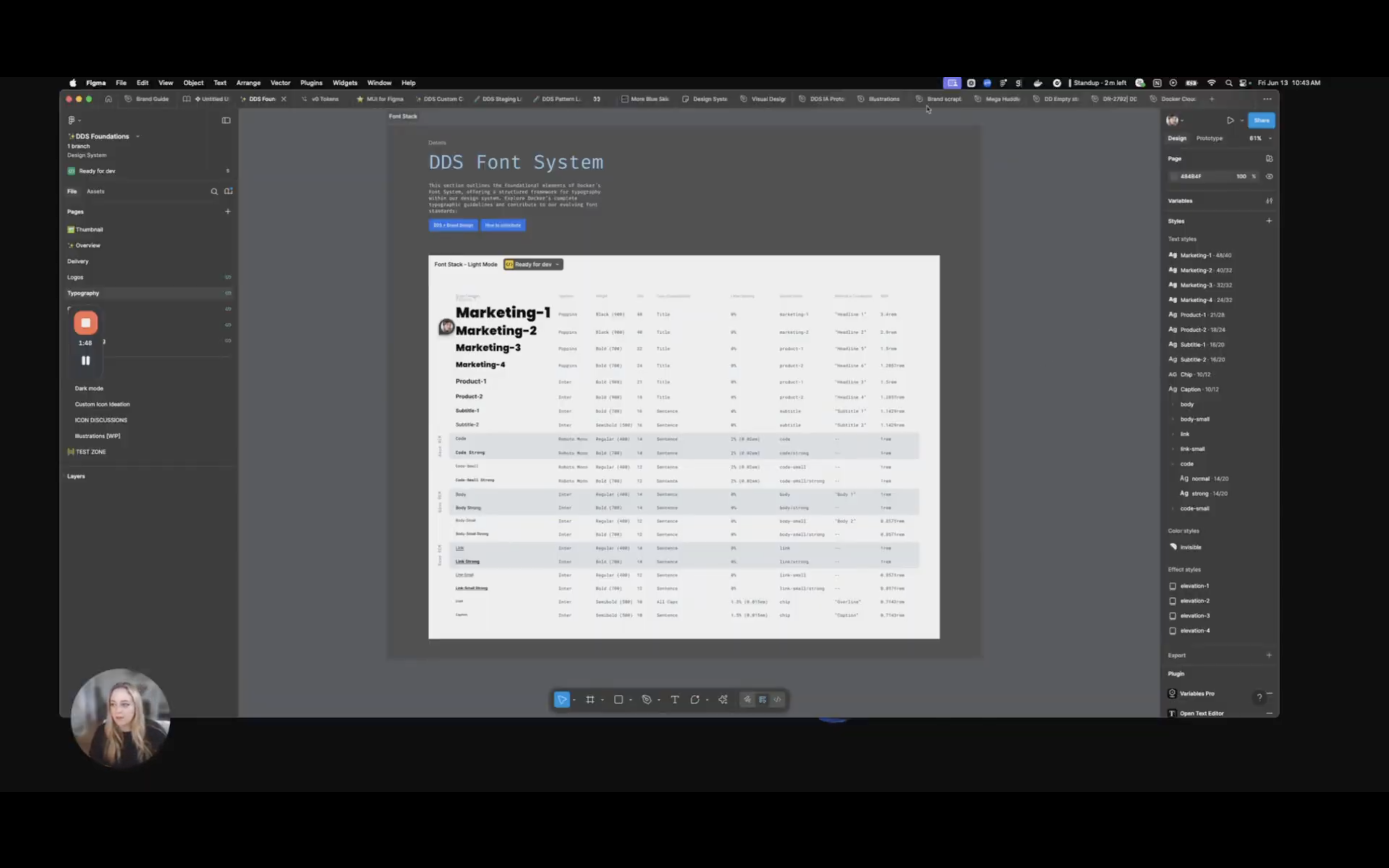
Token-based architecture
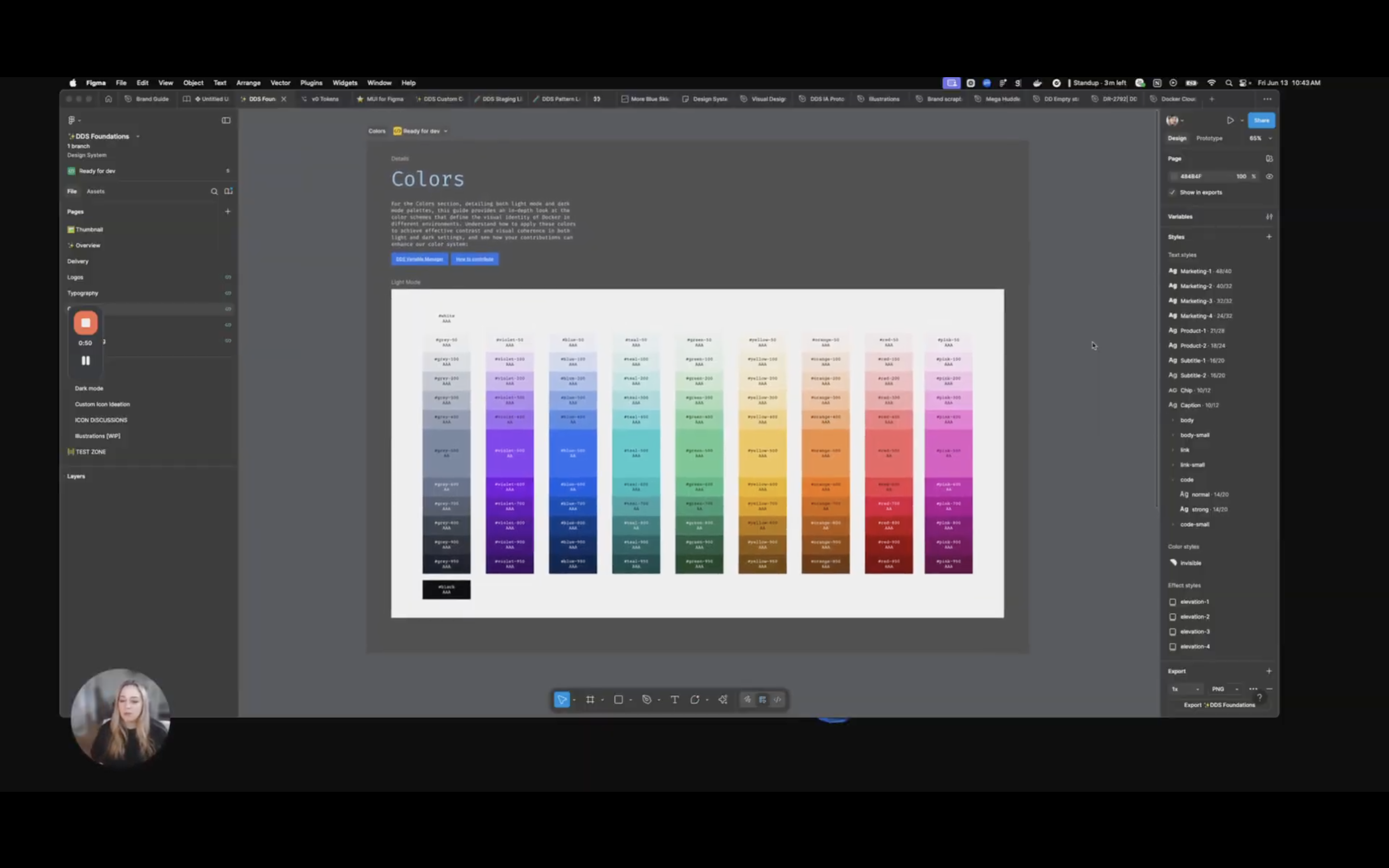
A unified, reusable visual language was established by tightly integrating brand, product design, and engineering. This was translated into a production-ready design language, and a foundational component library was established with direct engineering parity.
After a year of adoption and feedback, a next-generation V2 design system initiative was launched to future-proof governance, contribution models, and extensibility.
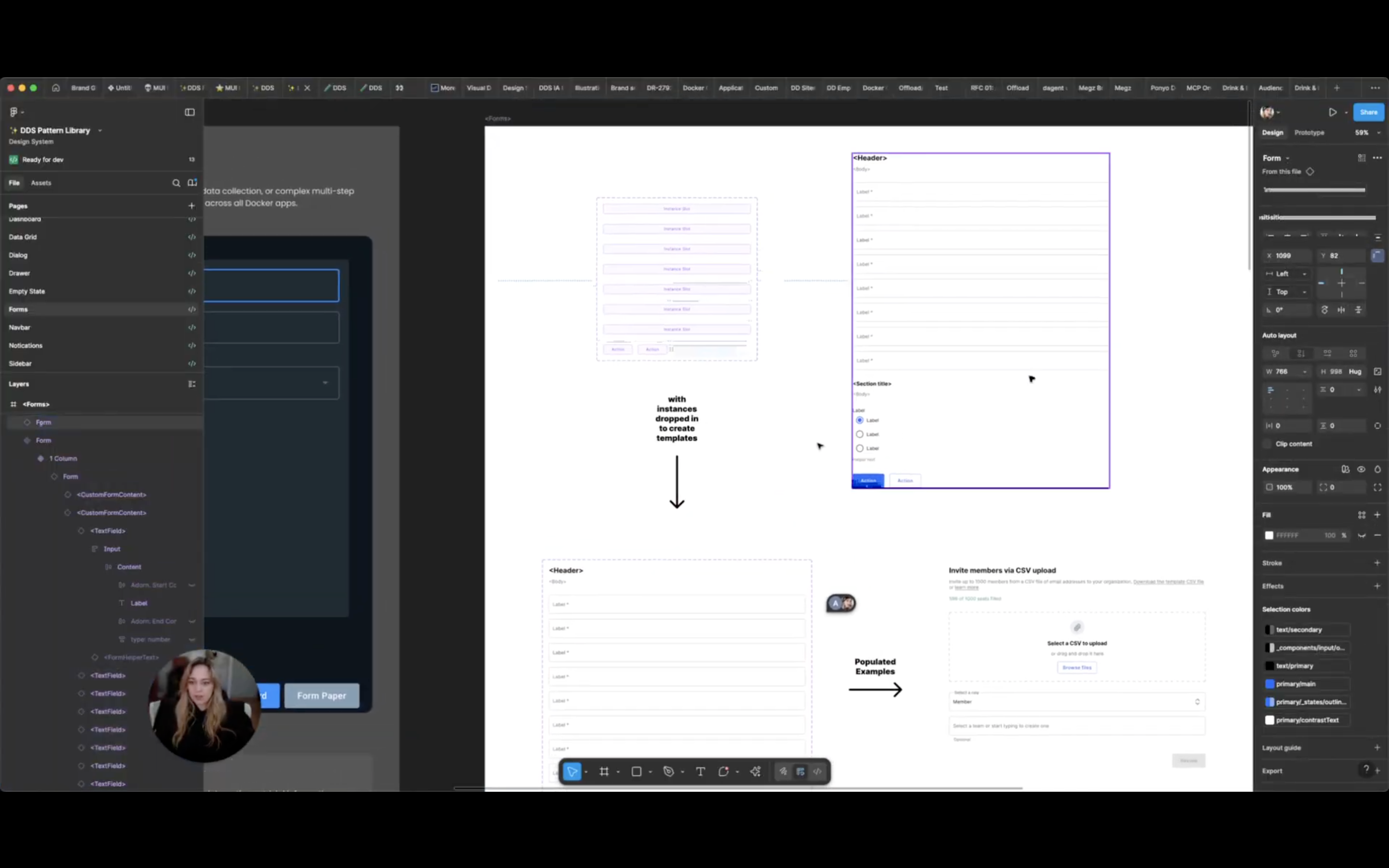
The system included an updated component library, documentation, and tooling for designers and developers. By focusing on reusable components and clear guidelines, we reduced duplicate work and improved consistency across all Docker products.
Results
Unified experience for 30M+ developers
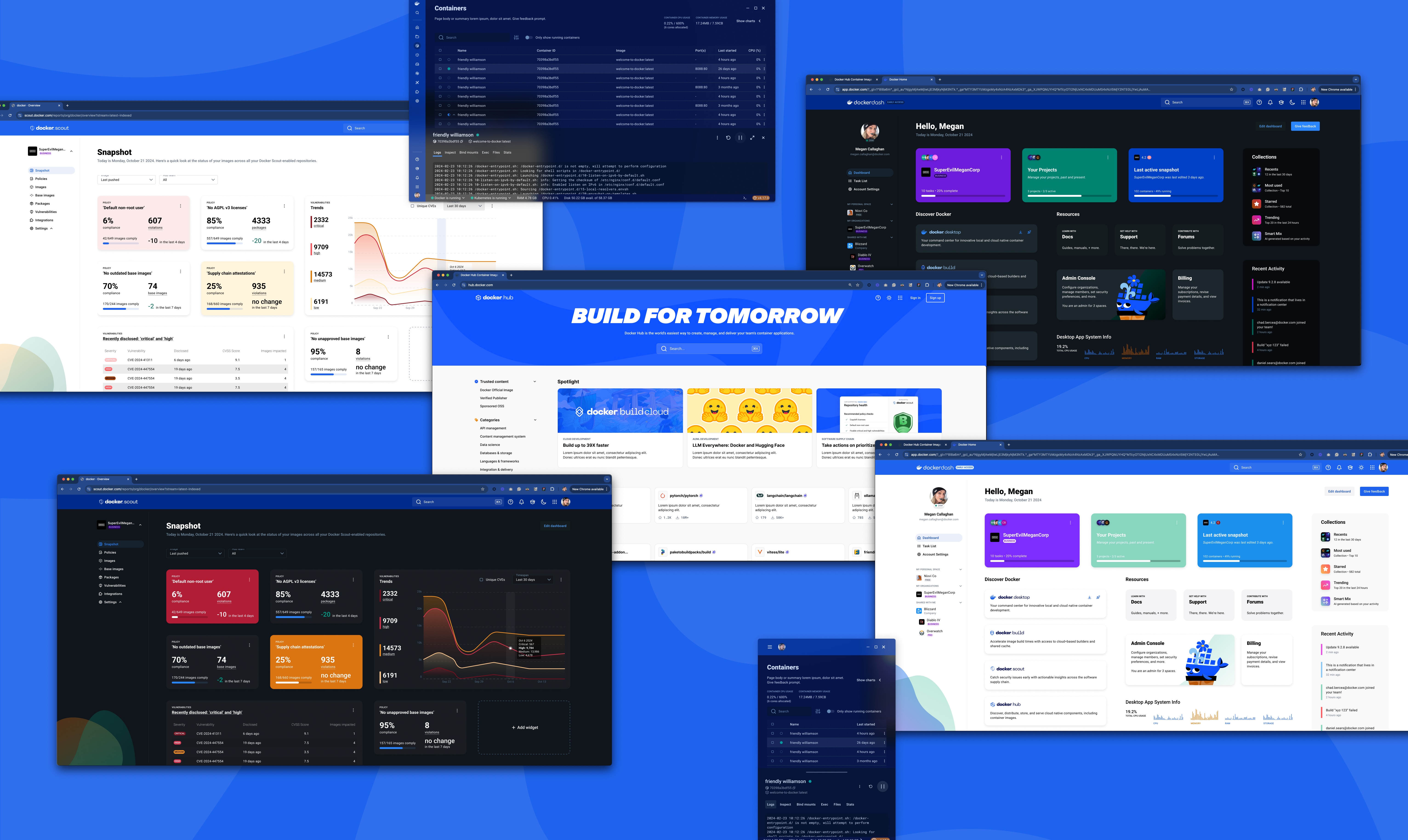
The Docker design system successfully unified the visual language across all products, leading to faster development cycles and improved user satisfaction. Design fragmentation was eliminated, delivery velocity increased, and confidence in visual consistency was restored at an organizational level.
Docker entities adopted DS atoms (palette, fonts, spacing, icons)
Active products implemented production components
Reduction in UI implementation time per feature
Reusable components delivered